Football boot bags for muddy winter training: check lining and care
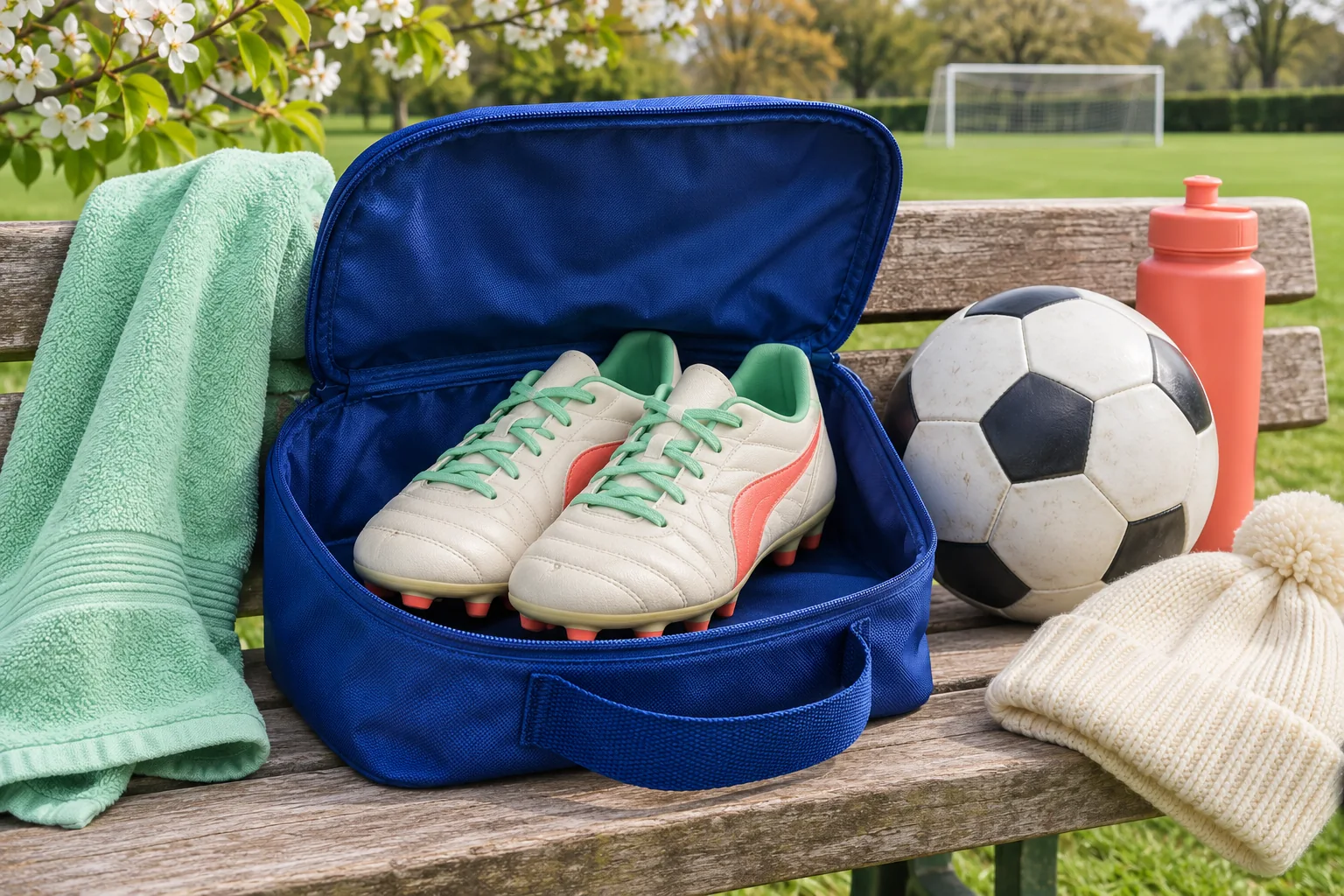
Muddy winter training makes boot storage practical, but the bag still needs to fit the footwear you use. Start with the boots rather than the size label on the bag. Check the arrangement for carrying and cleaning instead of assuming any lined compartment can be left packed between sessions.
Measure both boots together
Compare the bag's usable space with the pair in the position you will pack them. Consider studs and any protective arrangement recommended by the footwear maker. A bag described for adult boots may not fit every size or shape.
Read lining and ventilation details
Check the actual claims and intended use. A lined or water-resistant bag is not necessarily suitable for transporting saturated kit or storing it long term. Follow the manufacturer's guidance about ventilation, cleaning and drying.
Inspect the opening
Look for access that lets you remove the boots without scraping the closure or spilling debris across other kit. Check handle design and fastening details. Small internal pockets should have a clear purpose rather than being counted as an automatic advantage.
Plan unpacking after the journey
Choose a storage routine that lets the boots and bag be cared for separately according to their instructions. Compare a dedicated bag with a compartment in your existing sports bag. Add delivery to the price comparison and avoid a duplicate arrangement that solves no new problem.
A practical comparison
If boots fit only when the zip is forced around the studs, check another size or design. A little extra usable space can matter more than an exterior pocket you will not use.
Your shortlist before checkout
- Measure the pair in its packed position.
- Read lining and drying instructions.
- Check the opening and carry handle.
Can muddy boots stay in a zipped bag until the next session?
Follow the boot and bag manufacturers' care instructions. A transport bag does not automatically provide suitable long-term storage for damp footwear.