January kitchen organisation: choose a bread bin that fits the worktop
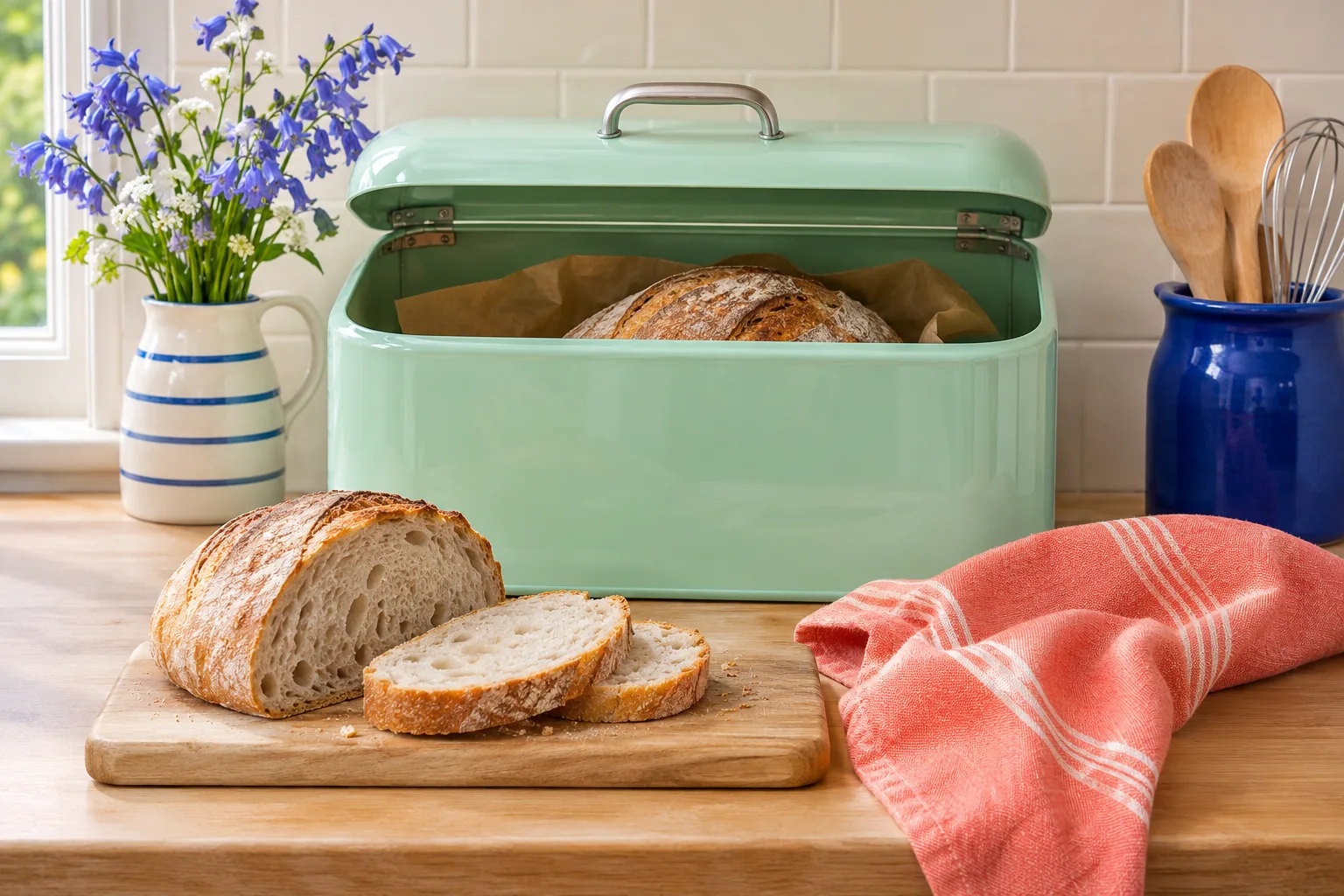
A bread bin should accommodate the bread you actually buy without taking over the worktop. Before choosing a January kitchen refresh, measure both the loaf and the available corner. The way a lid opens can make more difference than a few extra centimetres of advertised capacity.
Compare the inside space
Check usable dimensions against a normal loaf and any rolls you keep alongside it. A curved front or internal hinge can reduce the space. Ask the retailer for internal measurements if the listing shows only the outside shell.
Allow for opening the lid
Read how the lid moves and measure the clearance beneath cupboards. A roll-top and a hinged lid need different working space. Keep access to nearby sockets and preparation areas practical rather than fitting the bin into a gap it cannot open in.
Inspect cleaning and materials
Read care guidance for the body, lid and any removable base. Check whether the maker permits using the lid as a board; do not infer this from its shape. Make sure the cleaning method suits the way you use the kitchen.
Choose storage with a purpose
Consider whether the current packaging and a different shelf position already meet your needs. A bread bin is an organisation choice, not a universal promise about freshness. Compare the complete delivered price and avoid a larger matching set unless each container has a role.
A practical comparison
If the bread bin fits beneath a cupboard only while closed, check an alternative opening style. The space is not usable storage if accessing an ordinary loaf means moving the whole bin every morning.
Your shortlist before checkout
- Measure a usual loaf and the inside space.
- Check full lid clearance.
- Read cleaning and lid-use instructions.
Will any bread bin keep every loaf fresh for a fixed number of days?
Do not assume that. Follow the bread producer's storage guidance and evaluate the bin's specific description rather than relying on an unstated freshness promise.