Reading lights for long winter evenings: check the clip and charging
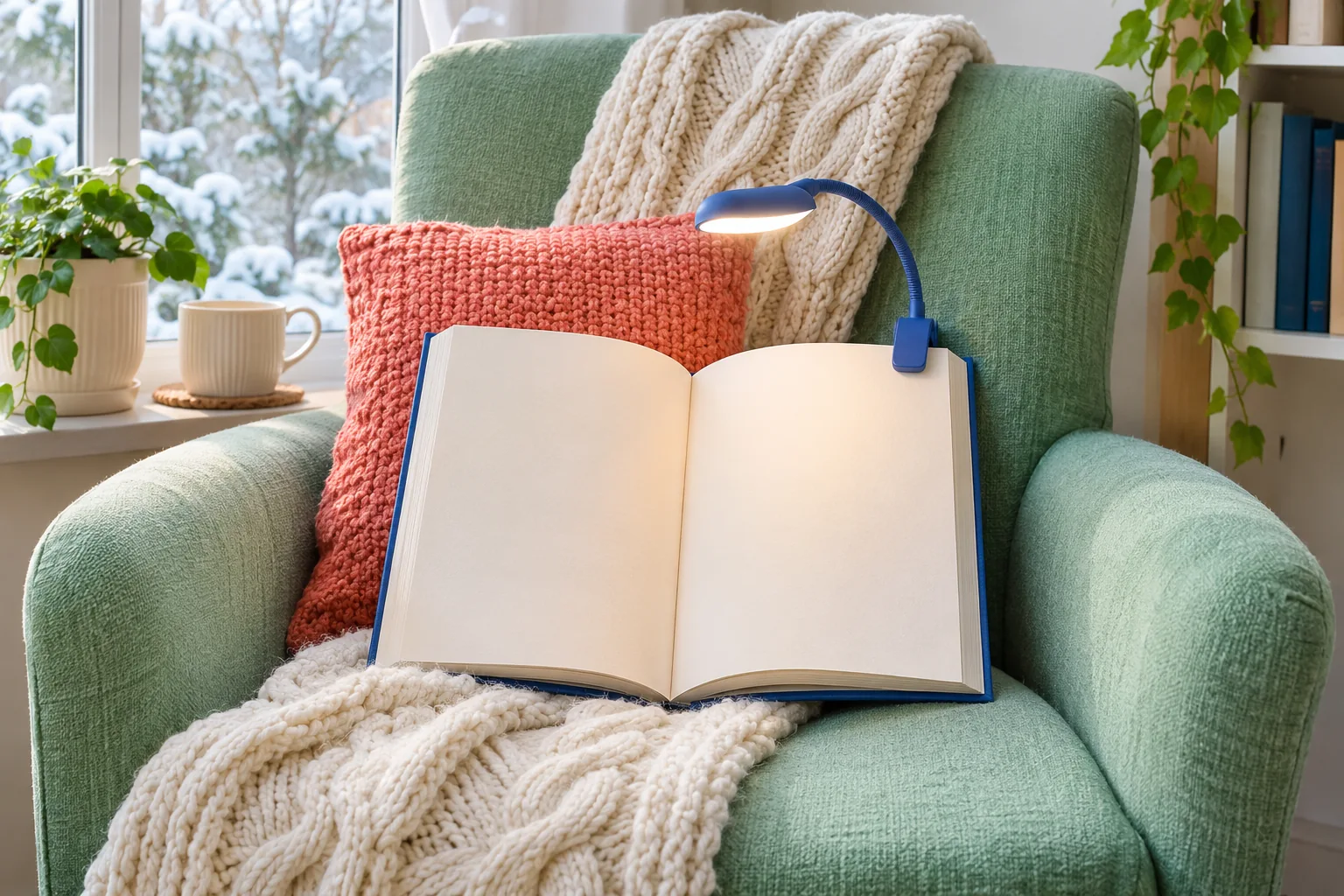
A reading light is useful only if it stays where you need it and leaves the book comfortable to hold. Before buying one for winter evenings, think about the books you read and the seat you use. A clamp suited to a shelf may not suit a paperback.
Check the clamp's intended support
Read the supported thickness and surface guidance. Compare the clip position with the book cover or shelf you plan to use. Avoid forcing a clamp onto a delicate edge or assuming it will grip every surface without damage.
Compare reach and adjustment
Look at how the light is positioned relative to the page and your hands. A flexible neck needs a suitable base or clamp to work properly. Check whether the beam can be directed without the body of the lamp obstructing the text.
Read power and operating details
Compare battery, charging and mains options with the location. Check included cables and any required power supply. Follow charging instructions and do not assume a reading light is suitable for outdoor or damp use unless its specification says so.
Choose for the real reading routine
A bedside lamp may already do the job for a fixed position. A clip-on light can be useful when portability is the missing feature. Compare weight, storage and controls before adding accessories or paying for modes you will not use.
A practical comparison
If the light is mainly for an armchair paperback, check the combined book-and-lamp handling rather than a photograph of the lamp on a desk. Portability has value only when the setup remains comfortable to use.
Your shortlist before checkout
- Check clamp range and supported surfaces.
- Compare reach with your usual books.
- Confirm power and supplied accessories.
Will a clip-on light suit every paperback?
Not necessarily. Check the clip's intended support and weight, and consider whether it will make your particular book awkward to hold.