Winter hallway storage: organise wet-weather arrivals in a small space
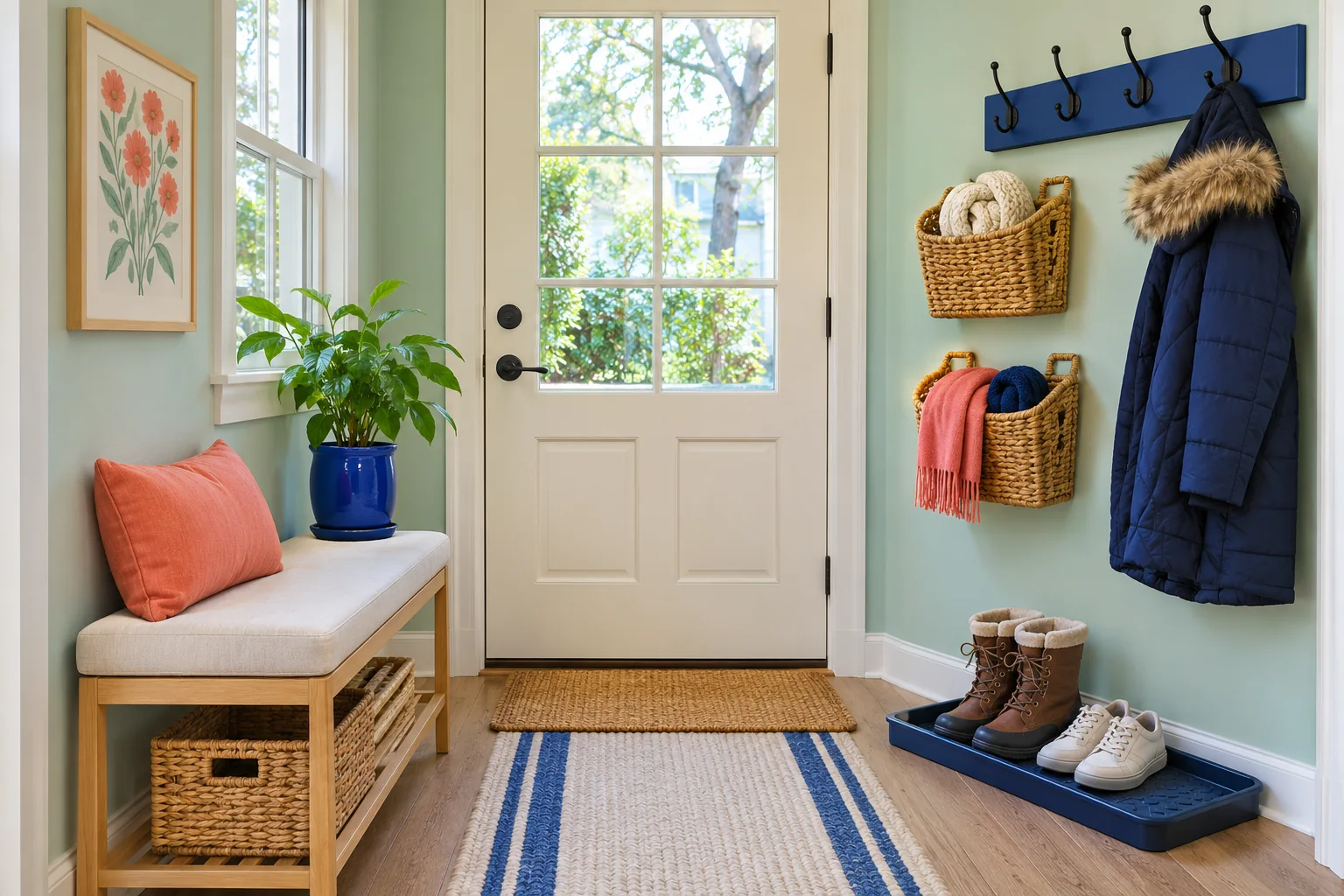
Winter arrivals can leave a narrow hallway full of boots, scarves and damp coats. Start by counting what lands there on an ordinary weekday. The best purchase may be a washable tray or one basket rather than a new cupboard that makes the entrance harder to use.
Measure doors as well as furniture
Mark the proposed footprint with removable tape and open nearby doors fully. Check that people can pass comfortably. Include handles, projecting hooks and the space needed to pull out a drawer. Product width alone does not describe how a piece of furniture works in use.
Allocate a place for each daily item
Count the shoes and coats that need to stay by the door. Use internal shelf dimensions to check taller boots, rather than assuming a shoe rack will hold them. Keep occasional footwear elsewhere if it is crowding out the things you reach for every morning.
Keep damp items separate from stored ones
Check whether a tray or mat can be cleaned and where damp accessories can dry. Do not put wet scarves straight into a closed basket. Choose materials using the care information and inspect how removable liners are washed. A small practical drying area can be more useful than another decorative container.
Choose fittings for the wall and intended load
Read installation instructions for hooks and furniture, including any securing requirements. Check suitability for the wall type and use the correct fixings or professional help where needed. A bench should be used for sitting only if it is designed for that purpose. Compare function before coordinating colours.
Your shortlist before checkout
- Check door swings and walking space.
- Measure the tallest boots and internal shelves.
- Read fitting, load and cleaning instructions.
Should a small hallway have a closed shoe cupboard?
Only if it suits the available space and your routine. An open rack or tray may be easier for daily arrivals; check clearance, cleaning and the number of pairs first.