Original price was: £100.10.£91.00Current price is: £91.00.
Only available for a short time – act fast!
This content is intended for individuals aged 18 and over. Please drink responsibly. For more information, visit DrinkAware.co.uk.
Description
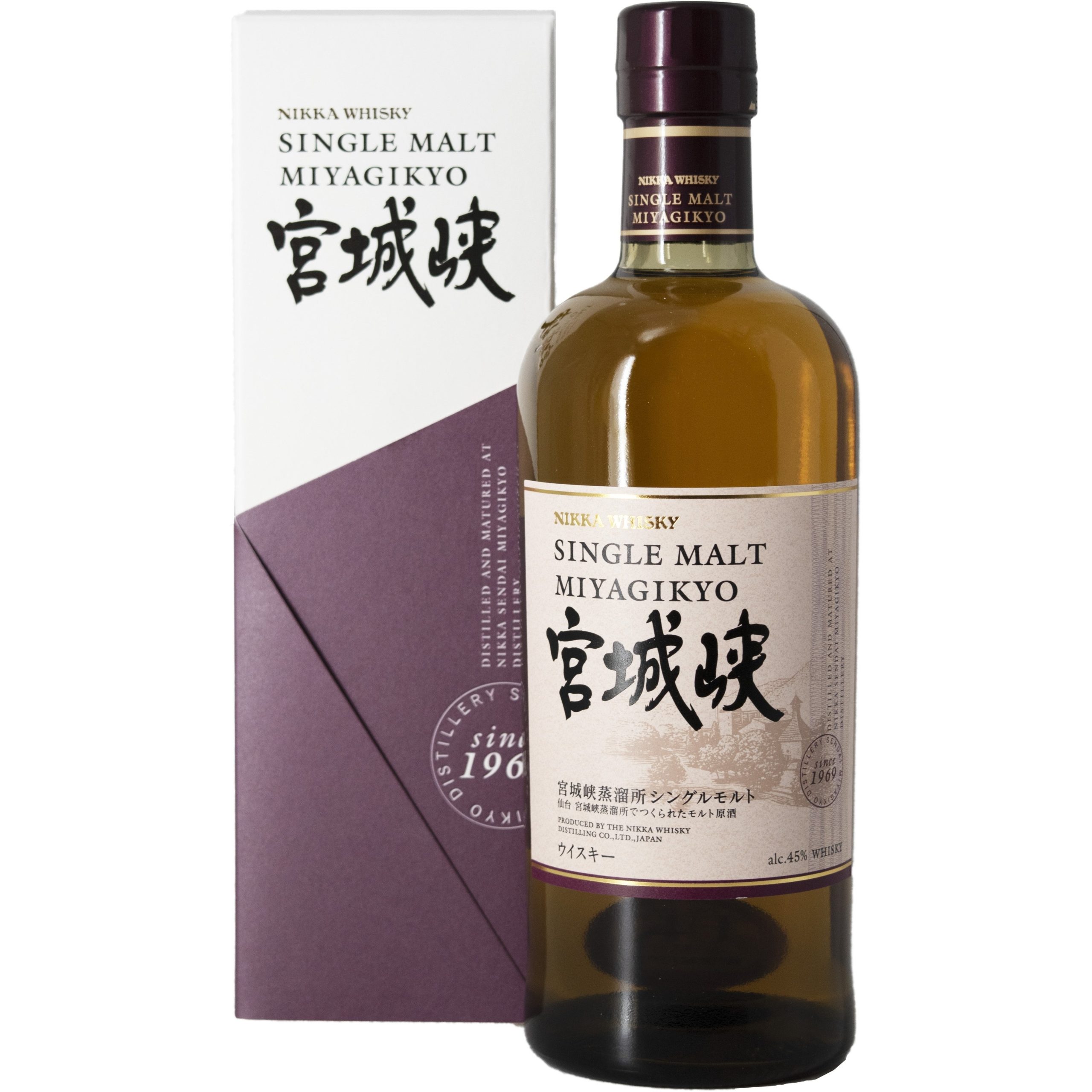
ABOUT THE WHISKY. In 1918, Masataka Taketsuru, the son of a sake-brewing family, was sent to Scotland to study Scottish whisky. He returned to Japan at the end of 1920, with his Scottish wife, Rita, and was employed by the Kotobukiya Group (later renamed Suntory) to build the Yamazaki Distillery, the first whisky distillery in Japan. At the end of his contract Masataka left to found his own distillery in 1934 on the northern island of Hokkaido in the coastal town of Yoichi, where the cold climate, sea breezes and local peat bogs mirrored conditions in Scotland. Initially called ‘Dai Nippon Kaju’ (The Great Japanese Juice Company), the company released its first whisky under the name Nikka in 1940, and the name was officially changed in 1952. Following the death of Rita in 1961, Masataka became increasingly focused on his work to improve the Nikka blends, importing Coffey column-stills from Scotland, which operated from a plant in Nishinomiya. In 1969 the Miyagikyo Distillery was completed in the rolling hills of northern Honshu; large, steam-heated stills and exceptionally pure water from the Nikkawa River give this distillery a bright, clean, fresh-fruit character. Masataka died in 1979, his legacy secure as the founding father of Japanese whisky.. TASTING NOTES. Attractive Sherry-influenced aromas, with floral, woody notes and the scent of ripe tropical fruit. The palate is soft and smooth, with continuing ripe apple, pear, peach and floral character. The finish is characterised by rising heat which lingers pleasantly, with a hint of wood-varnish and warm dough.. FOOD PAIRING. Best enjoyed neat; this is quite a delicate whisky. It would pair nicely with savoury biscuits and moderately flavoursome cheeses.. FRIARWOOD SAYS. Production for a Japanese malt whisky is effectively the same as for Scotch, with one significant difference: after mashing, a Scottish distillery will typically allow some of the solids from the malted barley to pass through to the washback, and sit with the fermenting wort. Japanese distilleries do not permit such untidiness, and their wort is typically clear, resulting in a ‘cleaner’ spirit with less malt-character.
Additional information
| CATEGORY | |
|---|---|
| DELIVERY | |
| Delivery time | |
| BRAND | |
| Condition | |
| STOCK | |
| PRODUCT TYPE |
Related products
-
Sale!

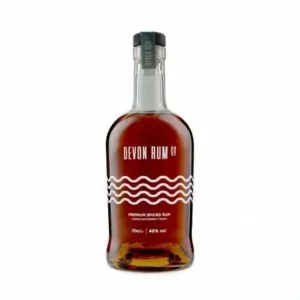
Devon Spiced Rum – 70cl
Original price was: £43.95.£39.95Current price is: £39.95. QUICK BUY -
Sale!
Choice Devon Cider Hamper – Wicker Hamper
Original price was: £49.45.£44.95Current price is: £44.95. QUICK BUY -
Sale!
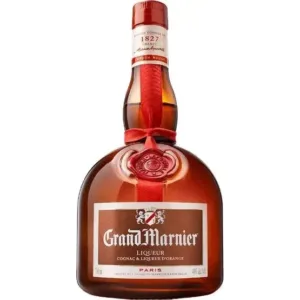
Grand Marnier – 5cl
Original price was: £4.68.£4.25Current price is: £4.25. QUICK BUY -
Sale!
Choice Devon Cider Hamper – Printed Box
Original price was: £39.05.£35.50Current price is: £35.50. QUICK BUY